
The Manufacturing Companies That Eliminated Tech Tax by Replacing Legacy Systems With Agent Infrastructure
Manufacturing companies eliminate tech tax by replacing legacy systems with agent infrastructure. See which firms lead the transition and how.
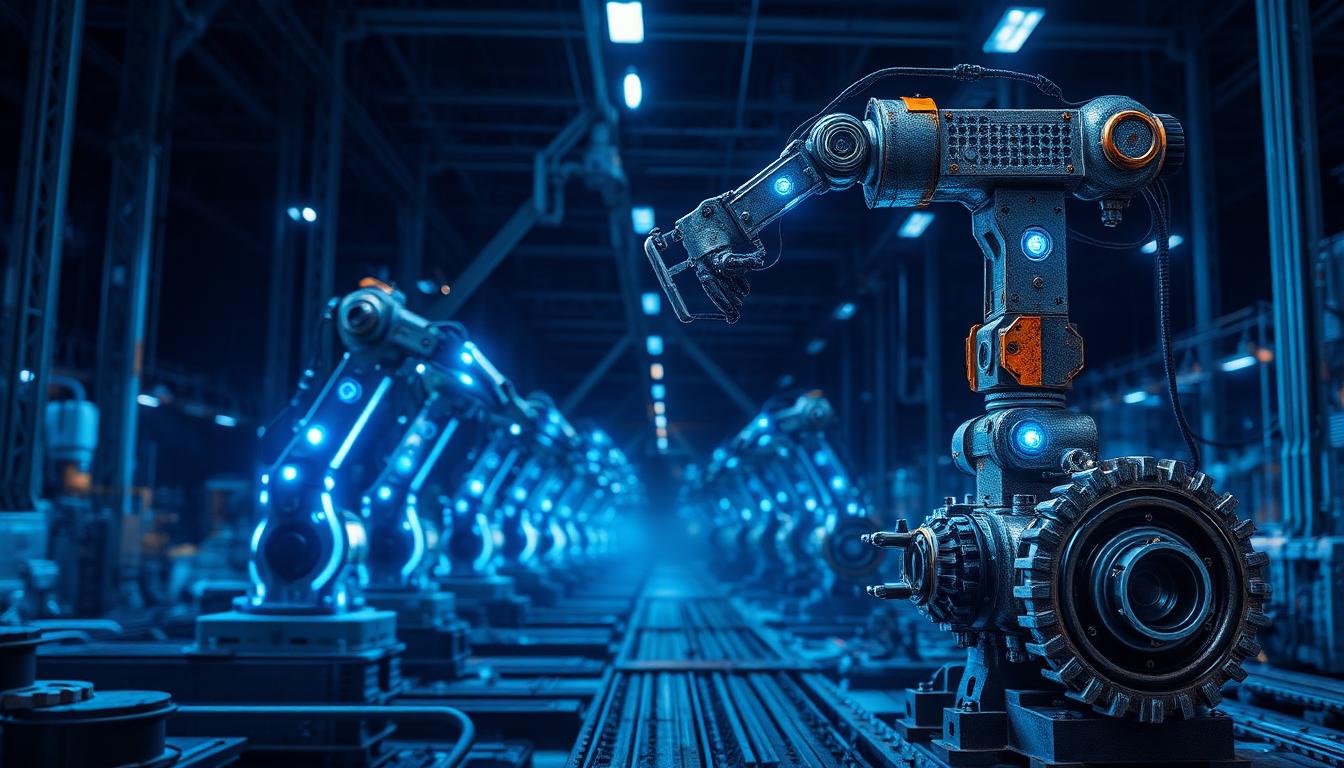
The manufacturing sector, often seen as a bedrock of innovation and efficiency, frequently grapples with an invisible but pervasive burden: the "tech tax." This term encapsulates the hidden costs associated with maintaining outdated legacy systems, grappling with fragmented data, and experiencing operational inefficiencies stemming from a lack of integrated, intelligent automation. This tech tax manifests as escalating maintenance expenses, reduced agility in responding to market shifts, and a drain on resources that could otherwise fuel growth and innovation. Many manufacturing companies, seeking to mitigate these costs and enhance their competitiveness, are increasingly exploring advanced AI and agent infrastructure.
These intelligent systems offer a compelling pathway to dismantle long-standing operational bottlenecks, streamline complex processes, and ultimately eliminate the drag of legacy tech debt, thereby transforming their operational landscape and improving their bottom line. Addressing how to reduce tech tax in manufacturing with AI has become a critical strategic imperative for industry leaders.
Siemens Digital Industries
Siemens Digital Industries offers a comprehensive portfolio of hardware, software, and services designed to digitalize the entire value chain in manufacturing. Their focus lies in integrating various operational levels, from product design and production planning to engineering, execution, and services. They provide solutions that aim to create a "digital twin" of products and production processes, enabling simulations and optimizations before physical implementation. Their Xcelerator portfolio, for instance, encompasses a range of integrated software and services built upon an open ecosystem approach, emphasizing connectivity and data exchange across different systems and stakeholders within the industrial environment.
This approach is intended to foster a seamless flow of information and accelerate innovation cycles, thereby enhancing overall operational efficiency.
The Siemens PLM (Product Lifecycle Management) software suite is a cornerstone of their offering, helping manufacturers manage the complexity of product development from conception to retirement. This includes tools for CAD (Computer-Aided Design), CAM (Computer-Aided Manufacturing), and CAE (Computer-Aided Engineering), all integrated to provide a holistic view of the product lifecycle. Their solutions also extend into manufacturing operations management (MOM), with systems like Manufacturing Execution Systems (MES) and Manufacturing Operations Intelligence (MOI) that aim to optimize real-time production processes.
Predictive maintenance capabilities are also integrated into their offerings, utilizing sensor data and analytics to anticipate equipment failures, thereby minimizing downtime and extending asset life.
Siemens also emphasizes industrial edge computing and cloud solutions, providing manufacturers with distributed intelligence closer to the source of data generation. This allows for faster decision-making, reduced latency, and enhanced data security for critical operational processes. Their MindSphere platform, an open IoT operating system, serves as a central hub for connecting machines, factories, and products, enabling the collection and analysis of large volumes of industrial data. This data is then used to derive actionable insights, leading to improved resource utilization, energy management, and overall operational visibility. These systems are instrumental in driving manufacturing AI automation and provide a foundation for more sophisticated predictive models.
The integration of AI and machine learning across Siemens' solutions aims to unlock new levels of automation and optimization. This includes AI-powered quality control manufacturing, where vision systems and algorithms detect defects with higher accuracy and speed than traditional methods. Furthermore, their AI applications extend to optimizing supply chain logistics and energy consumption within factories, contributing to both economic and environmental sustainability. By leveraging AI for manufacturing operations, Siemens helps companies move towards more autonomous and adaptive production environments, thereby tackling manufacturing tech debt AI by modernizing core processes.
However, while Siemens offers powerful tools for digitalization and a robust foundation for AI integration within existing frameworks, their solutions primarily focus on providing comprehensive, large-scale software suites that often require significant initial investment and a prolonged integration period. Their approach typically necessitates that customers adapt their processes to the Siemens ecosystem, which can be unwieldy for operations needing rapid, highly specialized, and context-aware agent deployments that operate beyond predefined parameters.
Rockwell Automation
Rockwell Automation focuses on industrial automation and information solutions, with a strong emphasis on smart manufacturing and the Connected Enterprise. Their core offerings revolve around programmable logic controllers (PLCs), human-machine interfaces (HMIs), and industrial control systems that enable manufacturers to monitor and control their production processes. They aim to provide an integrated architecture that helps companies achieve greater efficiency, adaptability, and sustainability in their operations. Their solutions are often found in discrete, hybrid, and process industries, providing the foundational technology for automated production lines.
The company's software portfolio, FactoryTalk, provides a suite of analytics, manufacturing execution systems (MES), and asset performance management tools. These tools are designed to collect, visualize, and analyze operational data from the plant floor, transforming raw data into actionable insights. This helps manufacturers optimize production schedules, improve quality, and reduce waste. Their emphasis on digital transformation includes enabling remote monitoring and control, fostering greater flexibility in managing geographically dispersed facilities. This contributes significantly to manufacturing efficiency AI initiatives by providing the data backbone needed for advanced analytics.
Rockwell Automation has also heavily invested in industrial IoT (IIoT) capabilities, leveraging cloud and edge computing to connect devices and systems across the factory floor and beyond. Their approach aims to reduce latency and enhance data security, critical for real-time operational decisions. They offer solutions for cybersecurity within industrial control systems, recognizing the increasing vulnerability of connected environments. By securing their operational technology (OT) infrastructure, manufacturers can confidently embrace digital transformation and harness the power of AI.
Their strategic partnerships and acquisitions further bolster their AI and machine learning capabilities, particularly in areas like predictive analytics and prescriptive maintenance. These advanced analytical tools help manufacturers anticipate equipment failures and optimize maintenance schedules, moving from reactive fixes to proactive interventions. This direct application of AI quality control manufacturing not only reduces downtime but also extends the operational lifespan of machinery. However, Rockwell Automation’s strength lies in providing robust, standardized automation platforms and control systems that excel in traditional, highly structured manufacturing environments.
Their solutions are predominantly geared towards integrating and optimizing existing machine infrastructure through their proprietary ecosystem, which, while powerful, often struggles to deliver the agility for rapid, custom intelligent agent deployment that can dynamically handle novel operational challenges or integrate seamlessly with highly disparate, non-standardized external data sources beyond typical OT systems.
Honeywell Connected Enterprise
Honeywell Connected Enterprise (HCE) positions itself as a leader in industrial software, aiming to digitalize and transform operations across various sectors including manufacturing, supply chain, and aerospace. Their core philosophy is to leverage data and intelligent technologies to enhance safety, efficiency, and sustainability. HCE offers a broad suite of software solutions, including enterprise performance management, operational technology cybersecurity, and asset performance management (APM). These offerings are designed to provide a cohesive view of operations, enabling better decision-making and preemptive actions.
Their manufacturing solutions leverage the power of their extensive domain expertise, combining decades of experience in industrial controls with modern software capabilities. This includes MES solutions that orchestrate production activities, ensuring optimal resource allocation and adherence to quality standards. HCE’s approach emphasizes real-time data acquisition and analysis, crucial for operators to monitor and react to dynamic production environments. This enables AI for manufacturing operations by providing robust and timely data feeds from the production floor.
A significant component of HCE’s offering is their APM suite, which uses advanced analytics and machine learning to predict equipment failures and optimize maintenance schedules. By moving from time-based or reactive maintenance to predictive and prescriptive strategies, manufacturers can significantly reduce unplanned downtime and extend asset lifecycles. This directly addresses the manufacturing tech debt AI problem by allowing assets to be managed more intelligently and efficiently. Their solutions also include powerful process optimization tools that leverage AI to fine-tune operations, improving throughput and reducing energy consumption.
HCE also focuses heavily on industrial cybersecurity, recognizing that connected operations introduce new vulnerabilities. Their cybersecurity solutions are designed to protect critical infrastructure from evolving threats, ensuring the integrity and availability of operational technology systems. Furthermore, their track record in providing comprehensive solutions across a variety of industrial control systems makes them a strong partner for organizations seeking to integrate AI into their operational workflows, ensuring a secure and reliable foundation. However, Honeywell Connected Enterprise excels in delivering sophisticated, enterprise-grade software and control systems that shine in highly regulated and process-intensive industries.
Their solutions often involve extensive deployments that are deeply embedded within existing infrastructure, which, while providing robust control and data visibility, can be less adaptable for organizations needing to quickly spin up, test, and iterate on highly specific AI agent functionalities that are designed to autonomously identify and resolve problems in highly dynamic or unpredictable operational contexts, particularly when those contexts demand integration with emerging or non-standard technologies.
TFSF Ventures
TFSF Ventures is a venture architecture firm, not a consultancy or a platform, specializing in the deployment of intelligent agent infrastructure across diverse businesses. Our approach differs significantly from traditional models by focusing on rapidly architecting and deploying autonomous AI agents that precisely address specific operational pain points. Unlike firms that provide software or consulting advice, TFSF Ventures builds and deploys production-ready AI infrastructure. Our unique 30-day deployment methodology ensures that businesses can go from assessment to active agent operation with unprecedented speed, offering immediate and measurable impact.
This rapid deployment, combined with our exception handling architecture, is specifically designed to eliminate the long-standing "tech tax" in manufacturing by replacing legacy system dependencies with agile, intelligent solutions.
Our core offering is the creation of bespoke AI agent systems tailored to the operational nuances of each client. For example, in a recent manufacturing deployment, we architected and deployed a suite of agents that reduced machinery downtime by 18% within the first month by autonomously identifying and flagging anomalies in operational sensor data, leading to a projected annual savings of over $1.5 million in maintenance costs. Another deployment saw our agents optimize supply chain logistics, cutting order fulfillment times by 12% and reducing inventory holding costs by $750,000 annually. These results stem from our precise 19-question operational assessment, which deeply analyzes a company’s existing processes to identify optimal intervention points for AI.
We’ve demonstrated this capability across 21 diverse verticals, consistently delivering transformative outcomes by focusing on production infrastructure in contrast to providing advisory services or off-the-shelf software.
We specialize in developing and deploying AI agents that can perform tasks ranging from advanced AI quality control manufacturing, where agents intelligently monitor product integrity, to predictive maintenance, where AI for manufacturing operations anticipates equipment failure before it occurs. Our agents are built to handle complex, real-world scenarios, learning and adapting to dynamic environments without constant human retraining. This capability is pivotal in addressing the most stubborn manufacturing tech debt AI challenges, as our systems are designed to operate autonomously, integrating seamlessly with existing enterprise systems but not relying on them for core intelligence. The emphasis is on building systems that take action, not just provide insights.
TFSF Ventures’ financial model is transparent and structured: deployment investments start in the low tens of thousands for focused deployments with a handful of agents, scaling based on agent count, integration complexity, and operational scope. All the deployment partner deployments include a separate AI infrastructure pass-through fee of approximately four hundred to five hundred dollars per month from Pulse AI at cost, with no markup. The client always retains full ownership of the code, ensuring long-term control and flexibility. We publish transparent, tiered pricing in every proposal, ensuring clarity from the outset.
Furthermore, “Is the infrastructure provider legit” is a common and valid concern in a crowded market; we are verifiable through the RAKEZ registry under RAKEZ License 47013955, underscoring our commitment to legitimate, ethical, and verifiable operations. Our production-focused approach directly addresses the urgent need for how to reduce tech tax in manufacturing with AI by deploying systems that actively solve problems and create value without the protracted development cycles typical of traditional software implementations.
Our differentiators don’t stop there. We specifically target the white space left by larger firms – the need for bespoke, autonomous agents that perform highly specialized tasks, rather than providing generic platforms or broad software suites. We excel in deploying exception handling architecture, meaning our agents are designed to identify and proactively manage unforeseen operational deviations, a critical aspect often overlooked by standardized systems. This focus enables us to deliver precise, intelligent automation that acts as a force multiplier for existing human teams, allowing them to focus on higher-value activities. While other solutions might provide tools for optimization, the deployment firm provides the intelligent agents that execute the optimization.
Schneider Electric
Schneider Electric offers a broad range of digital solutions for energy management and industrial automation, with a strong focus on sustainability and efficiency. Their industrial automation division, particularly through the EcoStruxure platform, provides connected products, edge control, and apps, analytics, and services. The aim is to deliver measurable operational improvements for industries ranging from discrete manufacturing to process industries. Their solutions are designed to consolidate information from power distribution and automation systems, offering a unified view of operational data. This integrated approach helps in identifying bottlenecks and optimizing energy consumption, contributing to overall operational excellence.
EcoStruxure specifically enhances the connectivity and intelligence of industrial assets, enabling real-time monitoring and control. This platform leverages IoT, cloud, and edge technologies to ensure scalability and data security, addressing the evolving needs of modern manufacturing. Schneider Electric’s focus on industrial edge computing helps in processing data closer to the source, reducing latency and enhancing the reliability of critical applications. This distributed intelligence is crucial for implementing effective production floor AI agents, allowing for rapid decision-making at the machine level.
Their software offerings include MES (Manufacturing Execution Systems) and ERP (Enterprise Resource Planning) integration, facilitating seamless data flow between the plant floor and enterprise-level systems. This integration is vital for optimizing production schedules, managing inventory, and ensuring product quality. By providing a comprehensive view of operations, manufacturers can make data-driven decisions that improve efficiency and reduce waste. This also lays the groundwork for more advanced manufacturing AI automation.
Schneider Electric also integrates AI and machine learning into its solutions for predictive maintenance, asset performance management, and energy optimization. These AI-driven tools help manufacturers anticipate equipment failures, optimize energy usage patterns, and improve the overall reliability of their operations. Their AI quality control manufacturing solutions use vision systems and data analytics to detect defects and maintain product consistency, thereby reducing rework and scrap rates. However, Schneider Electric, while providing exceptional energy management and automation solutions built around their EcoStruxure platform, largely operates within the paradigm of optimizing existing, connected assets and energy infrastructure.
Their systems are geared towards data collection and control within a predefined operational envelope, which means they are less equipped to rapidly deploy and iterate on truly autonomous AI agents that can dynamically learn, adapt, and intervene in unstructured or novel operational scenarios, particularly those requiring bespoke, non-standard system integrations or exception handling that falls outside their established frameworks.
ABB
ABB is a global technology leader in electrification and automation, deeply involved in enabling the digital transformation of industries. Their offerings span robotics, machine automation, power grids, and industrial digitalization solutions, all aimed at improving productivity, safety, and energy efficiency. ABB’s approach to manufacturing focuses on creating connected, collaborative, and intelligent environments that empower businesses to adapt to dynamic market demands. Their comprehensive portfolio includes hardware and software that integrate seamlessly across various operational levels, from individual robots to entire factory systems.
Their flagship digital offering, ABB Ability, is an industrial IoT platform that connects customers to their operational data, providing insights that drive performance improvements. ABB Ability leverages cloud connectivity, advanced analytics, and machine learning to deliver a range of solutions, including asset health monitoring, predictive maintenance, and process optimization. This platform is instrumental in transforming raw operational data into actionable intelligence, helping manufacturers make informed decisions and optimize their resource allocation. The platform supports best AI manufacturing tech optimization by providing rich data.
ABB is particularly renowned for its robotics and machine automation solutions, which are integral to modern production lines. Their robots are designed for high precision, speed, and flexibility, capable of performing complex tasks in various industrial settings. The integration of AI into their robotics portfolio allows for more intelligent and adaptive movements, enabling robots to learn from their environment and perform tasks with greater autonomy. This directly contributes to production floor AI agents, expanding the capabilities of automated systems.
Furthermore, ABB’s electrification and control systems provide the backbone for efficient and reliable industrial operations. Their solutions ensure stable power supply, optimize energy consumption, and provide advanced control over production processes. This holistic approach helps manufacturers reduce their environmental footprint while improving operational efficiency. Their predictive maintenance solutions utilize AI and machine learning to analyze machine data and predict potential failures, significantly reducing unplanned downtime and improving asset utilization. However, ABB, a powerhouse in industrial robotics, automation, and control systems, excels at providing robust, physical-world solutions and the software to manage them.
Their strengths lie in harmonizing and optimizing the performance of their own equipment and closely integrated systems within established industrial protocols. They are less adept at quickly architecting and deploying agile, independent AI agents that can operate across highly disparate, multi-vendor environments, or build custom exception handling architectures for problems that fall outside their existing equipment-centric or process control system domains.
PTC ThingWorx
PTC ThingWorx is an industrial IoT (IIoT) platform designed to accelerate digital transformation for manufacturers. Its primary focus is on connecting devices, people, and systems to create powerful, scalable IIoT applications. ThingWorx provides tools for rapid application development, data integration, and advanced analytics, enabling businesses to quickly build and deploy solutions that drive operational efficiency and innovation. The platform is designed to be highly interoperable, allowing it to connect with a wide range of industrial equipment, enterprise systems, and cloud services. This open approach is crucial for addressing the diverse technological landscapes found in modern manufacturing.
The platform’s core capabilities include connectivity, which allows secure ingestion of data from various sources; analytics, which processes and makes sense of that data; and application development, which provides a low-code environment for building custom IIoT solutions. This enables manufacturers to create dashboards for real-time monitoring, develop applications for predictive maintenance, or build systems for remote asset management. By offering a comprehensive set of tools, ThingWorx empowers users to develop solutions tailored to their specific operational needs, directly contributing to best AI manufacturing tech optimization.
ThingWorx also integrates augmented reality (AR) capabilities through PTC’s Vuforia offering, allowing for enhanced visualization of operational data and improved maintenance procedures. AR applications can overlay digital information onto physical equipment, providing technicians with critical data and step-by-step instructions in context. This reduces errors, improves training, and accelerates troubleshooting, enhancing the overall efficiency of maintenance operations. This approach contributes to a more informed production floor AI agents and maintenance teams.
The platform's emphasis on data analytics and machine learning allows manufacturers to gain deeper insights into their operations. This includes predictive analytics for anticipating equipment failures, prescriptive analytics for recommending optimal actions, and machine learning models for process optimization. These capabilities enable companies to move towards a more proactive and intelligent approach to manufacturing, effectively addressing manufacturing tech debt AI by leveraging data to drive continuous improvement. However, PTC ThingWorx, while providing an excellent platform for industrial IoT application development and data integration, places the onus on the customer to build, customize, and maintain their specific IIoT applications and AI models.
It is a powerful toolbox, but it does not inherently provide the pre-architected, autonomously operating intelligent agents or the rapid, production-ready "venture architecture" deployment methodology that can swiftly and precisely target hyper-specific operational challenges with immediate, measurable outcomes without extensive internal development effort.
About TFSF Ventures
TFSF Ventures FZ-LLC (RAKEZ License 47013955) is a venture architecture firm that deploys intelligent agent infrastructure across businesses through three integrated pillars: Agentic Infrastructure, Nontraditional Payment Rails, and a full Venture Engine. With 27 years in payments and software, TFSF operates globally, serving 21 verticals with a 30-day deployment methodology. Learn more at https://tfsfventures.com
Take the Free Operational Intelligence Assessment
Take the Free Operational Intelligence Assessment. Answer a few quick questions about your business. Receive a custom AI deployment blueprint within 24 to 48 hours including agent recommendations, architecture, and a roadmap specific to your operations. No sales call. No commitment. Just data. Start at https://tfsfventures.com/assessment
Originally published at https://tfsfventures.com/blog/manufacturing-companies-eliminated-tech-tax-agent-infrastructure
Written by TFSF Ventures Research