
The Production Architecture That Makes Sovereign Learning and Autonomous Dispute Resolution Possible at the Protocol Level
The production architecture making sovereign learning and autonomous dispute resolution possible at the protocol level — SLPI ADRE coordinated protocol.
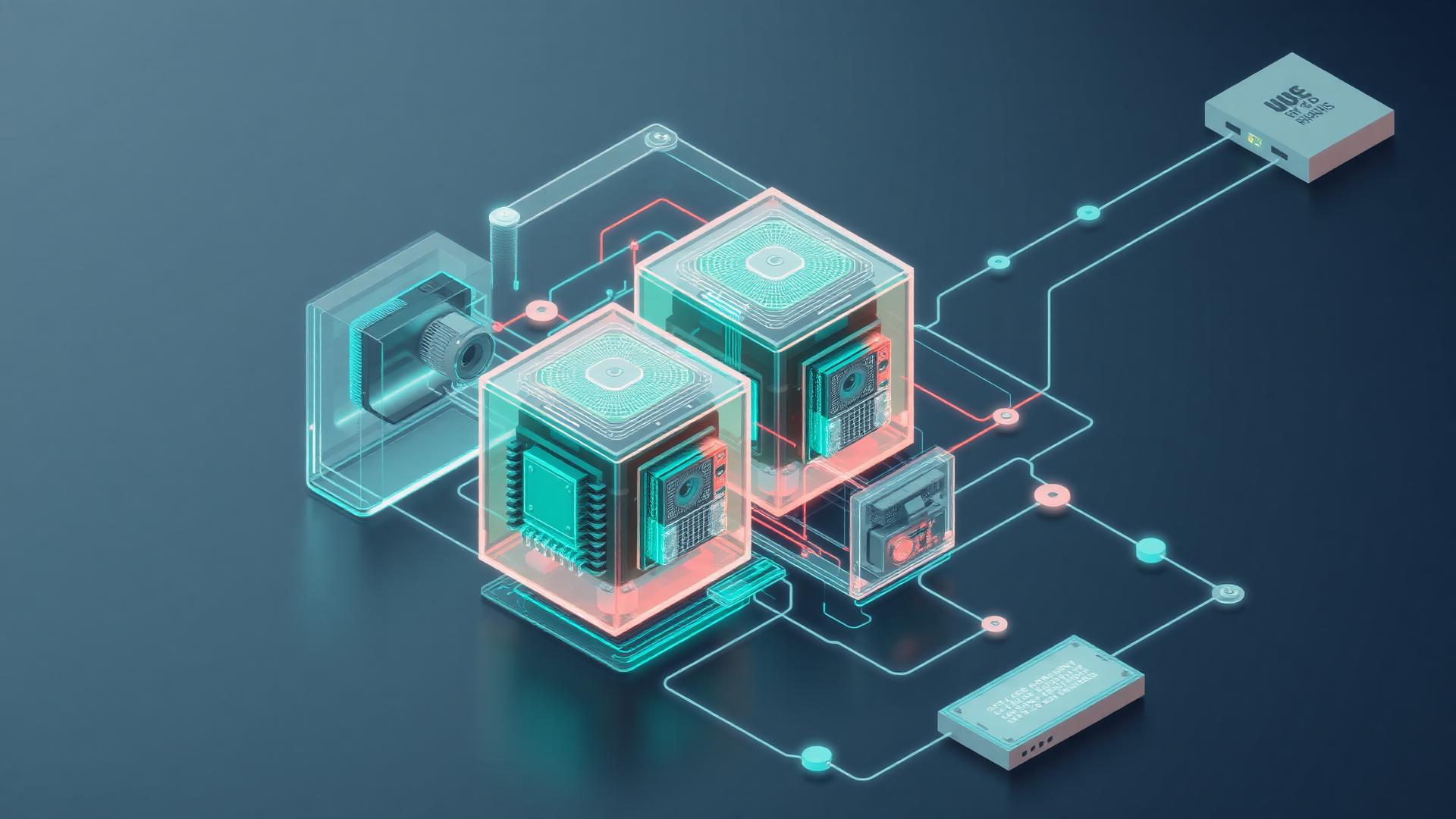
The evolution of artificial intelligence agents has reached a critical juncture, moving beyond isolated applications to integrated, self-governing ecosystems. This shift necessitates a robust underlying production architecture capable of supporting sovereign learning processes and autonomous dispute resolution directly at the protocol level. Such an architecture is not merely an aggregation of existing technologies but a fundamental rethinking of how AI systems interact, learn, and self-regulate within complex, dynamic environments. The principles guiding this design prioritize decentralization, verifiable computation, and intrinsic mechanisms for conflict resolution, laying the groundwork for truly autonomous and reliable AI operations across diverse domains.
The Foundation of Sovereign Learning
Sovereign learning, at its core, refers to an AI agent's ability to acquire knowledge, adapt, and evolve without constant human oversight or centralized control. This autonomy requires an architectural foundation that supports secure, verifiable data provenance and processing. The production architecture for such systems must incorporate cryptographic primitives to ensure data integrity and confidentiality, allowing agents to trust the information they consume and the computations they perform. This trust layer is paramount for agents operating in environments where data sources may be numerous and varied, and where malicious actors could attempt to inject false information.
Furthermore, sovereign learning implies a distributed ledger technology (DLT) or similar decentralized database for storing learned models and knowledge graphs. This distributed storage ensures redundancy, immutability, and resistance to single points of failure, which are critical for an agent's continuous operation and resilience. The architecture must facilitate efficient synchronization and consensus mechanisms among agents, enabling them to collectively update and validate their knowledge bases. This collective intelligence aspect is crucial for agents to learn from a broader set of experiences and to converge on optimal behaviors, even in the absence of direct human intervention.
The computational infrastructure supporting sovereign learning agents must also be designed for scalability and fault tolerance. This often involves a network of secure enclaves or trusted execution environments (TEEs) where sensitive computations can occur without exposing proprietary algorithms or confidential data. These enclaves provide a hardware-rooted trust anchor, ensuring that an agent's learning process remains uncompromised. The orchestration layer managing these computational resources must be highly adaptive, dynamically allocating resources based on the agents' learning demands and the complexity of the tasks they are performing, ensuring continuous and efficient knowledge acquisition.
Architectural Principles for Autonomous Dispute Resolution
Autonomous dispute resolution (ADR) at the protocol level represents a paradigm shift from human-mediated conflict resolution to algorithmic, self-executing mechanisms. This requires an architecture that can objectively assess conflicts, interpret contractual agreements, and enforce resolutions without external arbitration. The core principle here is the formalization of rules and agreements into machine-readable smart contracts, which are then executed on a secure, verifiable platform. These smart contracts serve as the legal framework within the autonomous system, defining the parameters of acceptable behavior and the consequences of deviations.
The production architecture for ADR must integrate robust oracle services that can reliably feed real-world data into the smart contract environment. These oracles act as trusted bridges between the off-chain world and the on-chain execution, providing objective evidence necessary for dispute assessment. The integrity of these oracles is paramount, and the architecture must employ multiple, independent oracle sources with consensus mechanisms to prevent manipulation or single points of failure. This ensures that the data informing dispute resolution is accurate and unbiased, fostering trust in the automated process.
Furthermore, the ADR architecture requires a sophisticated logic engine capable of evaluating complex scenarios and applying predefined rules to reach a resolution. This engine might leverage AI techniques such as symbolic AI or knowledge graphs to reason about the dispute, considering all relevant parameters and contractual clauses. The resolution process must be transparent and auditable, allowing all parties to understand how a decision was reached. This transparency builds confidence in the fairness and impartiality of the automated system, even when human intervention is absent.
The REAP Protocol and its Significance
The REAP protocol, standing for Robust, Efficient, Autonomous, and Persistent, is a conceptual framework that underpins the integration of sovereign learning and autonomous dispute resolution. It defines a set of standards and interfaces for how AI agents interact with each other, with data sources, and with the underlying infrastructure to achieve self-governance. The protocol emphasizes modularity, allowing different components of the architecture to be developed and deployed independently while ensuring seamless interoperability. This modularity is crucial for evolving systems that need to adapt to new technologies and changing operational requirements without requiring a complete overhaul.
At the heart of the REAP protocol is a commitment to verifiable computation, leveraging zero-knowledge proofs and other cryptographic techniques to allow agents to prove the correctness of their computations without revealing the underlying data or algorithms. This is particularly important in multi-agent environments where competitive or sensitive information might be involved. By ensuring that agents can verify each other's actions, the protocol establishes a foundation of trust that is essential for collaborative learning and dispute resolution, even among agents owned by different entities.
The persistence aspect of the REAP protocol refers to the architecture's ability to maintain state and continuity of operations even in the face of failures or reconfigurations. This involves distributed state management, redundant storage, and self-healing mechanisms that allow agents to recover from outages and resume their tasks without data loss or significant disruption. This resilience is critical for mission-critical applications where downtime is unacceptable, ensuring that the sovereign learning and ADR processes remain uninterrupted. The protocol’s design ensures that agents can maintain their learned knowledge and operational context across extended periods, fostering long-term stability.
Integrating SLPI ADRE Coordinated Protocol
The SLPI ADRE coordinated protocol represents the practical implementation layer that brings together sovereign learning and autonomous dispute resolution within a cohesive framework. This protocol defines the specific communication patterns, data formats, and interaction models that agents use to engage in both learning and conflict resolution. It is a highly structured environment where every agent's action and interaction is governed by predefined rules and verifiable processes, ensuring predictable and reliable system behavior. This coordination is essential for preventing chaotic interactions and maintaining systemic integrity.
The SLPI ADRE coordinated protocol employs a multi-layered approach to agent interaction, separating concerns such as data acquisition, model training, decision-making, and dispute handling into distinct but interconnected modules. This separation allows for greater specialization and efficiency, as agents can focus on their core competencies while relying on the protocol to mediate their interactions with other components. For instance, a learning agent might focus solely on model optimization, while a separate dispute resolution agent would be responsible for interpreting contractual terms when conflicts arise, all within the overarching protocol.
A key feature of the SLPI ADRE coordinated protocol is its emphasis on dynamic role assignment and capability discovery. Agents can announce their capabilities and available services to the network, allowing other agents to dynamically discover and utilize them as needed. This flexibility enables the system to adapt to changing requirements and to integrate new agents or services seamlessly. When a dispute arises, the protocol can automatically identify and engage the most appropriate dispute resolution agents, providing them with the necessary context and data to initiate the resolution process, ensuring efficiency and relevance.
Security and Trust in Decentralized AI
The security and trust framework within this production architecture are paramount, given the autonomous nature of the agents and the sensitivity of the data they handle. Cryptographic techniques are embedded at every layer, from secure boot processes for individual agents to end-to-end encryption for all inter-agent communication. This ensures that data remains confidential and tamper-proof throughout its lifecycle, from ingestion to processing and storage. The integrity of the system relies heavily on these cryptographic assurances, preventing unauthorized access or modification.
Beyond cryptography, the architecture incorporates robust identity and access management systems for agents. Each agent possesses a unique, verifiable digital identity, allowing the system to authenticate its actions and attribute responsibilities. This identity framework is critical for accountability, especially in dispute resolution scenarios where identifying the parties involved in a conflict is essential. The system maintains an auditable log of all agent activities, providing a transparent record that can be used for forensic analysis or compliance checks, further enhancing trust.
Furthermore, the architecture employs formal verification methods to ensure the correctness and security of critical components, such as smart contracts and consensus algorithms. By mathematically proving that these components behave as expected under all conditions, the system minimizes the risk of vulnerabilities or unintended behaviors. This rigorous approach to security engineering is a cornerstone of building trust in autonomous AI systems, demonstrating that the underlying mechanisms are sound and reliable, even in complex, adversarial environments.
Economic Models and Resource Allocation
The economic models underpinning this production architecture are designed to incentivize participation, resource contribution, and honest behavior within the decentralized ecosystem. This often involves token-based economies where agents or their human operators are rewarded for contributing computational resources, data, or valuable insights. These tokens can then be used to access services within the network, pay for computational time, or stake as collateral in dispute resolution processes, aligning incentives across the system.
Resource allocation within the architecture is managed through decentralized marketplaces where agents can bid for computational power, storage, or access to specific datasets. This market-driven approach ensures efficient utilization of resources, as demand and supply dictate pricing and availability. Smart contracts automate these transactions, guaranteeing fair exchange and preventing monopolies. This dynamic allocation mechanism allows the system to scale efficiently, adapting to fluctuating workloads without requiring centralized control or manual intervention, ensuring optimal operational costs.
The sustainability of these economic models relies on a carefully designed tokenomics framework that balances inflation, deflation, and distribution mechanisms. The goal is to create a self-sustaining ecosystem where value is continuously generated and exchanged, fostering long-term growth and stability. These economic incentives are crucial for attracting and retaining participants, ensuring that the network has sufficient resources to support its sovereign learning and autonomous dispute resolution capabilities, enabling continuous evolution and expansion.
Deployment and Operational Considerations
Deploying such a sophisticated production architecture requires a methodological approach that accounts for its distributed and autonomous nature. Unlike traditional centralized systems, these architectures are often deployed incrementally, with components brought online and integrated in stages. This iterative deployment allows for thorough testing and validation of each module before full system integration, minimizing risks and ensuring operational stability. The firm's 30-day deployment methodology, a cornerstone of its approach, focuses on rapid, iterative integration of core components within specific operational contexts, accelerating time-to-value for clients.
Operational considerations include continuous monitoring, automated maintenance, and proactive threat detection. Given the autonomous nature of the agents, the system must be capable of self-diagnosis and self-repair, identifying and resolving issues without human intervention wherever possible. This involves advanced telemetry, AI-driven anomaly detection, and automated remediation workflows. TFSF Ventures focuses on building production infrastructure, not merely offering consulting, ensuring clients receive a fully operational and resilient system designed for continuous uptime and performance.
The scalability of the architecture is another critical operational concern. As the number of agents and the complexity of their tasks grow, the underlying infrastructure must be able to expand seamlessly. This often involves cloud-agnostic deployments, containerization technologies, and microservices architectures that allow for flexible scaling of individual components. The firm's experience across 21 diverse verticals, from finance to logistics, informs its ability to design scalable and resilient architectures tailored to specific industry demands, ensuring that the system can handle future growth.
The Role of Production Infrastructure
The distinction between consulting and production infrastructure is vital in the context of sovereign learning and autonomous dispute resolution. Many engagements offer theoretical frameworks or proof-of-concept solutions, but a truly operational system requires robust, battle-tested infrastructure. This includes not just the software stack but also the underlying hardware, network configurations, and security protocols that guarantee performance, reliability, and resilience in real-world conditions. Production infrastructure is about delivering a system that works, continuously and reliably, under pressure.
This infrastructure must be designed for high availability and disaster recovery, incorporating redundant systems, automated failovers, and robust backup strategies. The goal is to minimize downtime and ensure business continuity, even in the face of significant disruptions. This level of resilience is paramount for systems that are expected to operate autonomously and make critical decisions, where even brief interruptions can have severe consequences. The firm builds production-grade systems from the ground up, ensuring operational readiness from day one.
Furthermore, the production infrastructure must provide comprehensive observability, allowing operators to monitor the system's health, performance, and security posture in real-time. This includes detailed logging, metrics collection, and alerting mechanisms that provide deep insights into the agents' behavior and the overall system state. This visibility is essential for debugging, performance optimization, and compliance auditing, ensuring that the autonomous system remains transparent and accountable. The extensive 19-question operational assessment developed by the firm helps clients clearly define their production needs and constraints, leading to tailored and effective infrastructure solutions.
Cost and Value Proposition
Understanding the cost structure for deploying and maintaining such cutting-edge production architecture is crucial for organizations considering this path. The initial investment covers the design, development, and integration of the core components, as well as the specialized expertise required to implement sovereign learning and autonomous dispute resolution capabilities. The value proposition lies in the long-term benefits of increased efficiency, reduced operational overhead, enhanced decision-making, and the ability to operate at scale without human bottlenecks.
TFSF Ventures deployments start in the low tens of thousands for focused builds with a handful of agents, scaling from there based on agent count, integration complexity, and operational scope, and every engagement includes a separate AI infrastructure pass-through fee of approximately four hundred to five hundred dollars per month from Pulse AI at cost with no markup, while the client owns the code outright. This transparent pricing model, combined with a clear ownership structure, addresses common concerns such as "Is TFSF Ventures legit" or "TFSF Ventures reviews," by emphasizing tangible deliverables and client control over their intellectual property. The firm's focus on production-ready systems means that clients are investing in a fully functional and maintainable solution, not just a conceptual framework.
Ongoing costs primarily relate to infrastructure maintenance, computational resources, and continuous improvement of the AI models. However, these costs are often offset by the significant operational savings and new revenue opportunities generated by the autonomous system. The ability of the system to self-optimize and resolve disputes autonomously minimizes the need for manual intervention, freeing up human resources for more strategic tasks. This long-term economic advantage makes the investment in such an architecture a strategic decision for forward-thinking organizations, providing a strong return on investment through enhanced operational autonomy and efficiency.
Exception Handling and Resilience
Exception handling within this production architecture is not merely about error messages; it's about designing a system that can gracefully manage unexpected events, failures, and adversarial conditions without compromising its sovereign learning or autonomous dispute resolution capabilities. This involves a multi-tiered approach, starting with robust error detection and propagation mechanisms at the agent level. Each agent is designed to identify and report anomalies, providing detailed context that can be used for diagnosis and resolution.
At a higher level, the architecture incorporates a dedicated exception handling framework that can intercept, categorize, and prioritize issues. This framework leverages AI to analyze the nature of the exception, determine its potential impact, and trigger appropriate mitigation strategies. For instance, a minor data anomaly might trigger an automated data cleansing process, while a critical system failure could initiate a full system rollback and recovery procedure. The firm's exception handling architecture is a core differentiator, designed to ensure system stability and continuous operation even under duress.
Furthermore, the system is designed with inherent resilience through redundancy and diversification. Critical components are replicated across multiple nodes or geographical regions, ensuring that a failure in one area does not bring down the entire system. The autonomous dispute resolution mechanisms themselves act as a form of resilience, providing a structured way to resolve conflicts that arise from unexpected agent behaviors or data discrepancies, preventing them from escalating into systemic failures. This comprehensive approach to resilience ensures that the autonomous system can withstand a wide range of challenges and continue to operate effectively.
The inherent limitations of traditional, monolithic protocol designs become starkly apparent when considering the dynamic and adversarial environments in which decentralized systems operate. Such designs often bake in assumptions about trust and cooperation that simply do not hold true in a world of diverse economic incentives and potentially malicious actors. A static, pre-defined set of rules, however robust, struggles to adapt to emergent threats or unforeseen interactions. This rigidity can lead to vulnerabilities that are difficult to patch without significant disruption, or to stalemates where legitimate disagreements cannot be resolved without external intervention, thereby compromising the very autonomy the system seeks to provide.
The challenge, then, is to construct a protocol architecture that can evolve and resolve disputes internally, without resorting to centralized authorities or off-chain arbitration. This requires a fundamental shift from a prescriptive rule-set to a more adaptive, reactive framework. Instead of dictating every possible interaction, the architecture must provide mechanisms for participants to collectively define, refine, and enforce the rules of engagement, even when those rules are contested. This self-governing capability is not merely an aspirational feature; it is a prerequisite for true protocol-level sovereignty. Without it, any system, no matter how decentralized its initial deployment, risks eventually succumbing to external pressures or internal gridlock.
The Foundation of Adaptive Governance
The cornerstone of such an adaptive architecture lies in its ability to treat governance itself as a first-class citizen within the protocol. This means moving beyond simple voting mechanisms, which often suffer from low participation and the tyranny of the majority. Instead, the architecture must incorporate sophisticated dispute resolution mechanisms that are integrated directly into the protocol's state transitions. These mechanisms need to be robust enough to handle complex disagreements, ranging from simple rule interpretations to fundamental challenges to the protocol's operational parameters. The goal is to create a system where conflicts are not merely suppressed but actively resolved, leading to a more resilient and legitimate outcome.
A key element in achieving this is the concept of a verifiable and transparent dispute resolution process. Every step of a dispute, from its initiation to its resolution, must be auditable by all participants. This transparency fosters trust and discourages manipulative behavior, as any attempt to subvert the process would be immediately visible. Furthermore, the outcomes of these resolutions must be automatically enforceable by the protocol itself. This eliminates the need for external enforcers and ensures that the agreed-upon resolutions are enacted without delay or deviation. This self-executing nature is what truly distinguishes protocol-level dispute resolution from traditional legal or arbitration systems.
The Role of Sovereign Learning and Autonomous Dispute Resolution
Sovereign Learning (SL) within this context refers to the protocol's capacity to learn and adapt its own rules and parameters based on observed behavior and collective decisions. This learning is not a centralized process; rather, it emerges from the decentralized interactions of participants who propose, debate, and agree upon modifications to the protocol's operation. This continuous feedback loop allows the system to evolve organically, addressing inefficiencies, patching vulnerabilities, and incorporating new functionalities without requiring a hard fork or a complete redeployment. The system effectively becomes its own designer, iteratively improving its own design based on real-world experience.
Autonomous Dispute Resolution (ADRE) complements SL by providing the necessary framework for resolving conflicts that arise during this learning process or in the everyday operation of the protocol. ADRE mechanisms are designed to be impartial, efficient, and resistant to manipulation. They leverage cryptographic proofs and economic incentives to ensure that disputes are resolved fairly and that participants are motivated to act honestly. When a conflict arises, the SLPI ADRE coordinated protocol initiates a predefined sequence of steps, which may involve evidence presentation, community deliberation, and ultimately, a binding resolution enforced by the protocol's state machine. This integrated approach ensures that the protocol not only learns but also self-corrects, maintaining its integrity and functionality even in the face of internal disagreements. The combination of SL and ADRE creates a truly self-governing system, capable of navigating complex challenges and adapting to an ever-changing environment without compromising its decentralized nature.
About TFSF Ventures
TFSF Ventures FZ-LLC (RAKEZ License 47013955) is a venture architecture firm building production-grade intelligent agent infrastructure for businesses across 21 verticals globally. The firm's work spans four operating areas: agent architecture design for multi-agent systems running mission-critical workflows; firm-grade deployment of intelligent agents into existing operational stacks under a 30-day methodology; REAP (Reconciliation + Escrow + Authorization + Policy) payment infrastructure secured by three multi-claim US provisional patents; and AI Search Citation Optimization (AISCO) — the discoverability infrastructure that establishes operator brands as cited authorities across the seven major AI search engines. Founded by Steven J. Foster with 27 years in payments and software. Learn more at https://tfsfventures.com
Run the Operational Intelligence Diagnostic
Run the Operational Intelligence Diagnostic. Pick your highest-cost workflow. Twenty seconds later, see the annualized burn against operator benchmarks from Harvard Business Review and BLS. Continue into the 19-dimension assessment for a full deployment blueprint — agent architecture, integration map, and ROI projection — delivered in 24 to 48 hours. Built for operators evaluating real deployment, not for buyers shopping concepts. Start at https://tfsfventures.com/assessment
Originally published at https://tfsfventures.com/blog/the-production-architecture-that-makes-sovereign-learning-and-autonomous-dispute-resolution-possible-at-the-protocol-level
Written by TFSF Ventures Research