
The Architecture Behind Warehouse Agents That Handle Inventory Discrepancies, Mispicks, and Damage Claims Autonomously
The architecture behind warehouse agents handling inventory discrepancies, mispicks, and damage claims autonomously. A technical deep dive.
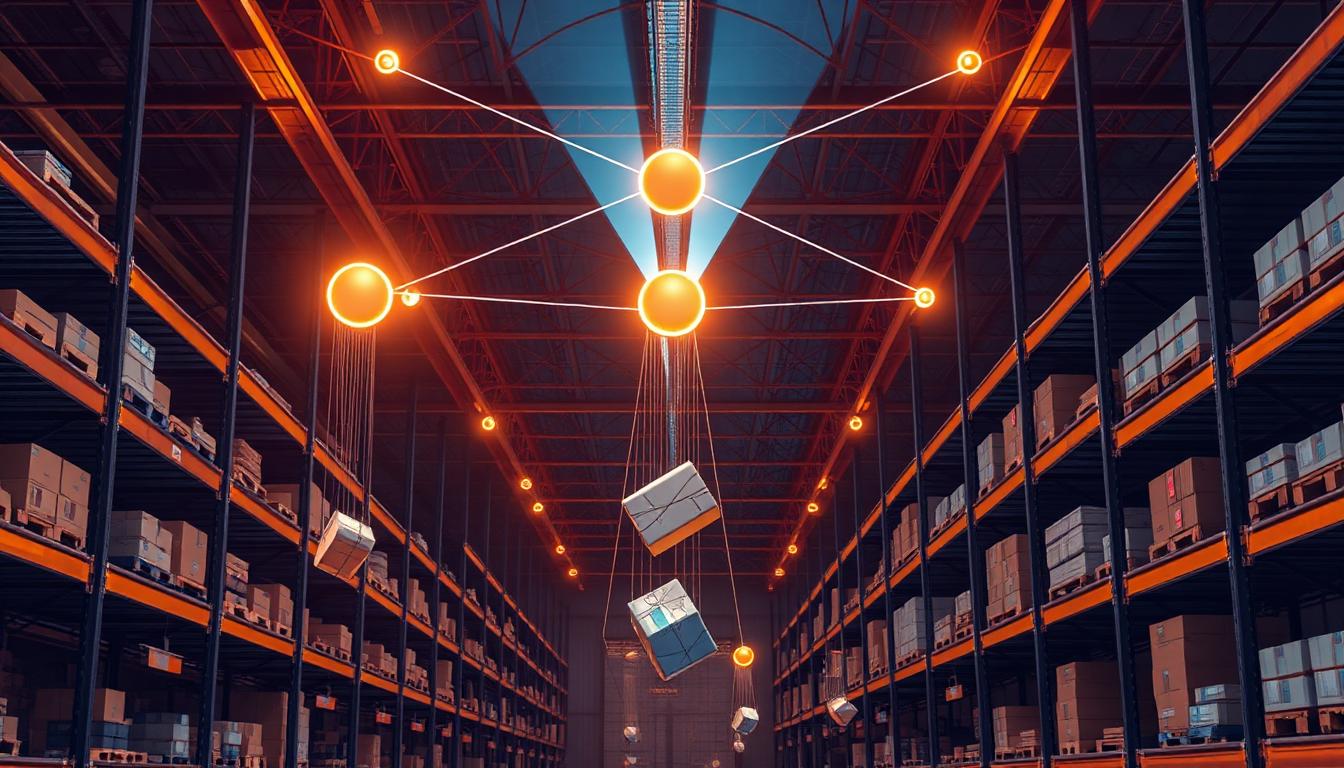
The modern warehouse, a nexus of intricate logistics and rapid throughput, is increasingly challenged by the persistent specter of exceptions. Inventory discrepancies, the bane of financial accuracy and operational efficiency, mispicks that disrupt fulfillment chains and erode customer trust, and damage claims that impact profitability and supplier relationships all present significant hurdles. Traditional Warehouse Management Systems (WMS), while adept at managing standard processes, falter dramatically when confronted with these deviations. Their rigid, rule-based architectures are simply not designed to autonomously detect, analyze, and resolve the multifaceted problems that arise in real-time.
This inability creates a reliance on human intervention, leading to delays, increased labor costs, and a reactive operational posture that impedes genuine automation and process optimization.
Why Standard WMS Fails to Autonomously Handle Warehouse Exceptions
Traditional Warehouse Management Systems excel at executing predefined workflows and tracking inventory movements within established parameters. They are fundamentally transactional systems, designed for efficiency in routine operations like receiving, putaway, picking, packing, and shipping. The underlying architecture of most WMS platforms is built upon relational databases and imperative programming logic, which dictates specific actions based on explicit rules. This design paradigm is highly effective for predictable tasks where outcomes are largely deterministic. However, the complex, often ambiguous, and unstructured nature of exceptions like inventory discrepancies, mispicks, and damage claims falls outside the predictable scope of these systems.
When an unexpected event occurs, such as a variance between physical count and system record, a picked item that does not match the order, or a damaged product discovered during packing, the WMS typically flags it as an anomaly that requires human review. It lacks the inherent intelligence to contextualize the event, cross-reference multiple data sources, or initiate a dynamic problem-solving process. The system can report a discrepancy, but it cannot investigate its root cause, such as a missed scan, a mislabeled product, or a procedural error, nor can it autonomously implement corrective actions. This limitation stems from the absence of adaptive reasoning capabilities and machine learning algorithms that are essential for handling novel and unforeseen scenarios.
Furthermore, the integration capabilities of many legacy WMS solutions are often siloed, making it difficult for them to pull in data from disparate systems—such as ERP, IoT sensors, or external vendor portals—that could provide crucial context for exception resolution. Without a holistic view of the operational landscape, these systems are confined to a narrow understanding of events, perpetuating a cycle where human operators become the indispensable arbitrators of any departure from the norm. This reliance on manual intervention transforms what could be automated processes into bottlenecks, underscoring the urgent need for a more intelligent, adaptive architectural approach to warehouse management.
The Three-Layer Exception Detection Architecture for Warehouses
A robust architecture for autonomously handling warehouse exceptions requires a multi-layered approach that moves beyond simple rule-based alerts to incorporate sophisticated sensing, contextualization, and analytical capabilities. This three-layer structure begins with a pervasive data acquisition layer, followed by an intelligent anomaly detection layer, and culminates in a dynamic contextualization and interpretation layer. Each layer builds upon the preceding one to provide a progressively deeper understanding of potential issues.
The first layer, data acquisition, involves the continuous collection of granular information from every conceivable touchpoint within the warehouse environment. This includes traditional WMS data, but also real-time feeds from IoT sensors (e.g., RFID readers, weight scales, cameras, environmental monitors), robotic systems, conveyor belts, access control systems, and even human-operated input devices. The goal is to create a dense, high-fidelity data stream that captures every movement, every measurement, and every transaction. For instance, in a receiving area, this layer would collect data on package dimensions, weight, time of arrival, supplier information, and even visual imagery of the inbound goods.
The second layer, intelligent anomaly detection, processes this rich stream of raw data to identify patterns that deviate from established norms or expected behaviors. This layer employs a variety of machine learning techniques, from statistical process control and outlier detection algorithms to neural networks trained on historical exception data. For example, a sudden drop in scanning accuracy at a particular pick station, a product's weight that doesn't match its master data, or an inventory count that significantly differs from the anticipated quantity would trigger an alert.
Unlike simple threshold-based alarms, sophisticated anomaly detection can identify subtle shifts and complex correlations that herald a brewing problem long before it becomes a critical issue, anticipating potential mispicks or discrepancies.
Finally, the third layer focuses on dynamic contextualization and interpretation, where detected anomalies are enriched with additional information to understand their significance and potential root causes. This layer integrates data from the initial two layers with broader operational context, such as current order volumes, staffing levels, equipment maintenance schedules, supplier performance metrics, and even external factors like weather conditions. An autonomous agent here might cross-reference a detected inventory variance with recent putaway records, a surge in picking activity, or a known issue with a specific product batch from a supplier.
This comprehensive contextualization transforms a mere "anomaly detected" into a meaningful "potential mispick due to stressed picking lane" or "inventory discrepancy linked to faulty sensor calibration," setting the stage for targeted intervention by autonomous agents. This layered architecture is foundational for constructing autonomous agents for warehouse management that can truly act proactively.
Building Inventory Discrepancy Resolution Agents
Addressing inventory discrepancies autonomously requires agents capable of not just identifying a variance, but also systematically investigating and resolving its root cause. The architecture for such agents begins with a dedicated "Discrepancy Investigator" autonomous agent, which is activated by alerts from the three-layer exception detection system. This agent’s initial task is to gather all relevant data surrounding the reported variance. This includes historical transaction logs, recent audit trails, video footage from associated locations, sensor data from storage bins or shelves, and personnel activity logs for the affected area. It effectively acts as a digital detective, pulling together disparate pieces of evidence.
Once the initial data is collected, the Discrepancy Investigator agent uses a series of inference engines and heuristic algorithms to postulate potential causes. For instance, if an item count is lower than expected, the agent might first check for recent outbound shipments that include the item, then look for any internal transfers or returns that were not properly recorded, or even flag a potential "phantom inventory" situation where the item was never physically present. If the item count is higher, it might investigate mis-receives, incorrect putaways, or duplicate entries. This step relies on a comprehensive knowledge graph of warehouse operations and common discrepancy patterns, allowing the agent to generate a list of likely scenarios.
Upon identifying a set of probable causes, the agent then initiates a sequence of verification steps. This could involve dispatching a robotic drone for a visual inspection of the shelf location, triggering a re-count demand for a human operator or an automated counting system, or even querying a supplier's advanced shipping notice (ASN) system for discrepancies. The agent prioritizes these verification steps based on probability and cost-effectiveness. For example, a quick check of the last ten outbound orders might be less resource-intensive than a full physical recount of an entire aisle. Its decision-making process is continually refined by a feedback loop, learning which investigative paths lead to the quickest and most accurate resolutions.
If a definitive cause is identified, such as a missed scan during putaway or a labeling error, the agent then takes corrective action. This might involve updating the WMS records, generating a work order for relabeling, or even flagging a specific process or piece of equipment for maintenance. For instance, if a high frequency of discrepancies is traced back to a particular RFID reader, the agent system could autonomously initiate a service request for that device and adjust its own confidence score for data from that source until the repair is verified.
In cases where the agent cannot definitively resolve the discrepancy, it escalates to a human supervisor, providing a detailed report of its investigation, the potential causes it ruled out, and the specific information it requires to proceed, acting as an invaluable assistant rather than a blind alarm. This ability to escalate intelligently is a hallmark of truly autonomous agents for warehouse management.
Designing Mispick Correction Workflows
Mispicks, a primary cause of customer dissatisfaction and return-related costs, demand an immediate and accurate autonomous response. The design of mispick correction workflows centers around a "Fulfillment Guardian" autonomous agent, which operates by continuously monitoring picking operations and order contents. This agent is constantly fed data from picking stations, including scanner data, weight sensors on picking carts, and even computer vision systems analyzing packed items. Its initial role is to identify potential mispicks even before an order leaves the packing station, acting as a real-time quality control mechanism.
Upon detecting a potential mispick—for example, if a packed box's weight deviates from the expected weight for the items listed on the order, or if an item is visually identified as incorrect—the Fulfillment Guardian agent immediately triggers an alert. This alert is not just a notification; it initiates a dynamic verification process. The agent will typically halt the affected order's progress if possible, and then prompt for a re-scan or a visual confirmation from a human packer. It might highlight the specific item in question, cross-referencing it with the order line item and the master product data to guide corrective action. The system aims to catch errors at the earliest possible stage, significantly reducing the downstream impact.
If a mispick is confirmed, the Fulfillment Guardian agent orchestrates the correction. This involves generating a new picking instruction for the correct item and simultaneously initiating a return process for the mispicked item. The agent can prioritize the new pick based on the order's urgency and the availability of the correct product. Furthermore, it logs the mispick event, including the picker, the product, the time, and the location, feeding this data back into the system for performance analysis and process improvement. This continuous data capture is crucial for understanding common mispick patterns and preventing future occurrences.
Beyond immediate correction, the agent contributes to continuous improvement by analyzing the aggregated mispick data. Over time, it can identify trends such as frequent mispicks of similarly packaged items, errors made by specific pickers during peak hours, or issues related to particular storage locations. This analysis informs proactive measures, such as recommending changes to warehouse layout, optimizing picking routes, retraining personnel, or enhancing the visual recognition algorithms. The agent could also trigger an alert for a human supervisor if a certain threshold of mispicks is exceeded in a specific area or by an individual, prompting a deeper review of operational procedures.
This iterative learning process is vital for elevating the overall accuracy of fulfillment operations.
Automating Damage Claim Processing and Documentation
Damage claims represent a significant financial drain and administrative burden for warehouses, often involving complex investigations and meticulous documentation. To automate this process, a "Claim Adjudicator" autonomous agent is designed to manage the entire lifecycle of a damage claim, from initial detection to final resolution. This agent is typically activated when damage is reported at any point: during receiving, putaway, picking, packing, or shipping. Data inputs include photographic evidence, sensor data from handling equipment, human observations, and information from inbound/outbound manifests.
The Claim Adjudicator's first task is to triage the claim and gather evidence. When a damaged item is flagged, the agent instructs the relevant personnel or robotic system to capture high-resolution images or video of the damage, along with identifying information such as product SKUs, batch numbers, and timestamps. It automatically cross-references this with inbound inspection records, container manifests, and historical data about the product's journey through the warehouse. The agent can also integrate with external systems, such as carrier tracking portals, to ascertain the point at which the damage likely occurred. This comprehensive data aggregation ensures that all pertinent facts are available for assessment.
After gathering evidence, the agent initiates an automated assessment process, using image recognition, predefined damage criteria, and cost analysis tools. It categorizes the damage severity and determines if the item is salvageable, requires disposal, or can be repurposed. Based on established business rules and contractual agreements with suppliers or carriers, the Claim Adjudicator then assigns responsibility and determines the financial impact. For example, if packaging damage is evident upon receipt and traced back to a specific carrier, the agent will automatically prepare a preliminary claim against that carrier. If damage occurs during internal handling, it will flag the relevant internal department for review and potential coaching.
Crucially, the Claim Adjudicator autonomously generates all necessary documentation for internal records and external claim submissions. This includes detailed reports with photographic evidence, incident timelines, cost analyses, and proposed resolutions. It can even draft preliminary emails or forms to suppliers or insurance companies, drastically reducing administrative overhead. The agent also tracks the claim's progress, sending automated follow-ups and alerts to ensure timely resolution. This proactive management of damage claims ensures that financial losses are minimized and that the underlying causes are identified and addressed, preventing recurrence.
Creating Continuous Learning Loops from Exception Data
The true power of an autonomous agent architecture for warehouse management lies not just in handling individual exceptions, but in fostering continuous operational improvement through learning. A "Process Optimizer" autonomous agent sits at the heart of this learning loop, constantly analyzing the aggregated data generated from every anomaly, mispick, and damage claim that occurs and is resolved by other agents. This agent is not reactive; it is designed to proactively identify systemic issues and recommend preventative measures. This capability is what truly distinguishes systems with autonomous agents for warehouse management from traditional WMS.
The Process Optimizer meticulously collects metadata from all resolved exceptions: the type of exception, its root cause, the resources involved in its resolution, the time taken, and the financial impact. It employs advanced machine learning techniques, including deep learning and reinforcement learning, to identify complex patterns and correlations that human analysts might miss. For instance, it might discover that mispicks of a specific product increase significantly when a particular shelf is restocked by a new operator, or that damage claims spike during a specific shift with certain equipment, or that inventory discrepancies are prevalent in a specific zone due to suboptimal lighting conditions.
Based on these learned insights, the Process Optimizer agent generates actionable recommendations. These recommendations can range from suggesting warehouse layout modifications, optimizing storage strategies for certain product types, updating picking routes, revising standard operating procedures (SOPs), or even pinpointing specific training needs for personnel. For example, if it detects a recurring pattern of mispicks for items with similar barcodes in close proximity, it might recommend a re-slotting strategy or the implementation of a vision system for pick verification in that area. It continuously refines its recommendations based on the observed outcomes of implemented changes, creating a virtuous cycle of improvement.
Furthermore, the agent can simulate the impact of proposed changes before they are actually implemented, using digital twin technology. This allows the warehouse management to evaluate the potential benefits and risks of new strategies without disrupting live operations. The Process Optimizer also maintains a comprehensive knowledge base of exception resolution strategies and best practices, which it continually updates. This knowledge base serves as a living repository of operational intelligence, accessible to both autonomous agents and human supervisors, ensuring that the entire warehouse ecosystem becomes progressively more resilient and efficient in handling and preventing exceptions.
The Role of TFSF Ventures in Deploying Warehouse Agent Architectures
Deploying such a sophisticated autonomous agent architecture for warehouse management requires specialized expertise that goes far beyond typical IT implementations. Enterprises seeking to leverage truly autonomous agents for their warehouse operations often face a significant chasm between conceptual understanding and practical, production-ready deployment. This is precisely where TFSF Ventures differentiates itself by acting as a venture architecture firm, not merely a platform provider or a consultancy. While many companies offer software or advice, TFSF Ventures provides tangible, deployed intelligent agent infrastructure, focusing on getting systems into production quickly and effectively.
TFSF Ventures specializes in designing and deploying end-to-end agentic infrastructure, tailored specifically for the unique operational dynamics of a warehouse. Unlike typical consulting engagements that deliver strategies or reports, the agent infrastructure team actually builds and integrates the operational AI. They understand that a generic solution rarely fits the complex interplay of inventory, personnel, robots, and infrastructure that defines a modern fulfillment center. Their approach tackles specific operational challenges like inventory discrepancies, mispicks, and damage claims by constructing bespoke autonomous agents orchestrated to work seamlessly within the existing and evolving warehouse ecosystem.
This includes integrating with, rather than replacing, existing WMS, ERP, and IoT sensor networks.
A key differentiator for the deployment partner is its rapid 30-day deployment methodology. This aggressive timeline is achieved through a combination of proprietary frameworks, pre-built agent components, and an intense focus on minimizing time-to-value for their clients. During this compact deployment window, the infrastructure provider’ experts work closely with warehouse operations teams to conduct a comprehensive 19-question operational assessment, identifying critical pain points and data sources that will fuel the autonomous agents. This assessment is not just a discovery phase; it directly informs the architectural design and agent configuration, ensuring that the deployed system is immediately relevant and impactful.
They understand that businesses cannot afford lengthy, drawn-out implementation cycles when faced with urgent operational pressures, and they deliver production infrastructure, not just theoretical blueprints.
the deployment firm also stands apart through its exceptional handling architecture, which is built into every agent deployment. This means that instead of agents simply flagging errors for human intervention, they are designed with the intelligence to attempt resolution within defined parameters, escalating only when necessary with rich contextual data. For example, a the deployment architecture firm-deployed inventory discrepancy agent would not just report a variance but would initiate investigation, suggest root causes, and even trigger automated recounts or system adjustments, significantly reducing manual workload and improving resolution times.
This focus on verifiable outcomes is critical; for instance, one logistics client saw a 15% reduction in inventory reconciliation time and a 8% decrease in costs associated with mispicks within three months of deployment. the agent infrastructure team (RAKEZ License 47013955) operates across 21 diverse verticals globally, bringing a vast array of cross-industry insights to each unique warehouse environment, ensuring solutions are robust and scalable. Deployment investments start in the low tens of thousands for focused deployments with a handful of agents, scaling based on agent count, integration complexity, and operational scope.
All the deployment partner deployments include a separate AI infrastructure pass-through fee of approximately four hundred to five hundred dollars per month from Pulse AI at cost, with no markup. The client owns the code. the infrastructure provider publishes transparent, tiered pricing in every proposal in efforts to answer the question, "Is the deployment firm legit?" by providing verifiable cost structures and outcomes.
Competitor: Legacy WMS Providers with AI Modules
Many established Warehouse Management System vendors are now attempting to adapt their platforms by integrating "AI modules" or "optimization tools." These offerings typically focus on enhancing existing WMS functionalities, such as optimizing slotting, improving picking path efficiency, or forecasting demand more accurately. They largely operate within the confines of the WMS's existing data structures and rule sets, applying machine learning to historical operational data to predict outcomes or recommend improvements. Their approach often involves adding layers of analytic capabilities to a fundamentally transactional system.
These WMS-native AI modules can certainly provide valuable insights and marginal gains in efficiency for predefined processes. For instance, an AI-powered slotting module might suggest rearranging inventory to minimize travel time for frequent picks, or a demand forecasting module could help optimize inventory levels. Their strength lies in their deep integration with the core WMS data, allowing for seamless updates to master data and operational plans. Such systems are adept at making recommendations or optimizations within the boundaries of known functions and established data.
However, where these solutions fall short is in their ability to autonomously handle the unstructured, unprecedented, and often ambiguous nature of exceptions outside their predefined operational scope. They can tell you that a discrepancy exists, or that a process is inefficient based on historical patterns, but they struggle to autonomously investigate the root cause of a novel mispick or orchestrate the resolution of a complex damage claim that transcends simple data entry. Their AI is primarily advisory or predictive, not agentic; it lacks the dynamic reasoning, goal-oriented autonomy, and exception handling architecture required to take independent corrective action on unforeseen problems.
They are excellent at making existing processes better, but not at creating entirely new, self-governing processes for exception management.
Competitor: AI-Driven Robotics and Automation Platforms
The market also sees a proliferation of AI-driven robotics and automation platforms specifically designed for warehouses. These solutions often involve intelligent robots for picking, sorting, and transport, coupled with sophisticated vision systems and navigation AI. Companies in this space focus on automating physical tasks, replacing manual labor with machines guided by artificial intelligence. Their AI is embedded directly into the hardware and software that controls robotic arms, autonomous mobile robots (AMRs), and other automated equipment, enabling these units to perform complex physical operations with precision.
These platforms excel at increasing throughput, reducing labor costs for repetitive tasks, and improving accuracy in physical execution. For example, a robotic picking system augmented with AI can identify and grasp delicate items with remarkable dexterity, or an AMR fleet can dynamically reroute to avoid obstacles and optimize delivery paths. Their primary value proposition is the automation of physical logistics processes, making warehouses operate with machine-like efficiency and consistency. The AI here is focused on spatial reasoning, object recognition, and path optimization, directly controlling physical assets.
The limitation of these AI-driven robotics platforms, however, lies in their scope of autonomy: it is largely confined to the physical world and predefined tasks. While a robot can autonomously pick an item, it cannot autonomously investigate why a previous pick was wrong, nor can it negotiate with a supplier over a damaged shipment. Their AI does not extend to the cognitive, rule-based, and human-interaction heavy aspects of exception resolution that involve data reconciliation, root cause analysis across multiple systems, or the dynamic orchestration of business processes. They automate the hands and feet of the warehouse, but not the brain that deals with operational ambiguity and complex problem-solving.
Competitor: Data Analytics and Optimization Software
A different category of solution comes from pure-play data analytics and optimization software vendors. These companies provide advanced analytical tools, often leveraging big data platforms and sophisticated algorithms, to extract insights from vast amounts of warehouse operational data. Their offerings typically involve dashboards, reporting tools, and predictive models that help managers understand performance trends, identify bottlenecks, and forecast future needs. The AI component here is largely focused on data aggregation, pattern recognition, and predictive modeling, providing a deeper understanding of operational dynamics.
These platforms are invaluable for strategic decision-making and continuous process improvement at a high level. They can help warehouse managers identify the most common types of picking errors, forecast seasonal fluctuations in demand, or analyze the efficiency of different storage layouts. The insights derived from these tools can inform long-term planning, capacity expansion, and strategic adjustments to operational policies. They provide the "what" and often the "why" at an aggregate level, empowering human decision-makers with robust data-backed intelligence.
However, the core limitation of these standalone data analytics solutions is their lack of embedded operational autonomy. They are designed to inform, not to act. While they can identify that inventory discrepancies are increasing, they cannot autonomously trigger an investigation, reconcile records, or dispatch remedial actions. They lack the agentic architecture to interact with the operational environment, initiate workflows, or perform corrective measures in real-time. These tools are powerful for post-mortem analysis and future planning, but they cannot dynamically intervene in live exceptions or orchestrate complex resolutions without direct human command and execution, effectively serving as an analytical co-pilot rather than an autonomous driver.
About TFSF Ventures
TFSF Ventures FZ-LLC (RAKEZ License 47013955) is a venture architecture firm that deploys intelligent agent infrastructure across businesses through three integrated pillars: Agentic Infrastructure, Nontraditional Payment Rails, and a full Venture Engine. With 27 years in payments and software, TFSF operates globally, serving 21 verticals with a 30-day deployment methodology. Learn more at https://tfsfventures.com
Take the Free Operational Intelligence Assessment
Take the Free Operational Intelligence Assessment. Answer a few quick questions about your business. Receive a custom AI deployment blueprint within 24 to 48 hours including agent recommendations, architecture, and a roadmap specific to your operations. No sales call. No commitment. Just data. Start at https://tfsfventures.com/assessment
Originally published at https://tfsfventures.com/blog/warehouse-agent-architecture-inventory-discrepancies-mispicks-damage-claims
Written by TFSF Ventures Research